Pension system

Pensions have returned to the center of public debates in recent months. Whether we are talking about recalculations, increases, or discussions regarding reform, for millions of Romanians, the pension is not just a figure in the budget, but the basis of existence after years of work. Before we see what is proposed, it is useful to understand “how we stand” now, both internally and in comparison with other European countries.
About the pension system and the pressure it is under, in the latest episode of The MacRO Zone.
LABOR MARKET & CONTRIBUTORS BASE
In Q1 2025, Romania had an active population of 8.15 million people, of which 7.65 million occupied and 506,100 unemployed, according to INS data.
Employment rate of the population aged 20-64 was 68,7%, decreasing compared to the previous quarter and below the target of 75% from the Europe 2020 Strategy.
🔎 Specifically, less than 70% of Romanians fit to work actually contribute to the pension fund – a small pool compared to the increasing number of beneficiaries.
RETIREMENT & LIFE EXPECTANCY IN ROMANIA
- Standard retirement age: 65 years (men) and 63 years (women), with a planned gradual increase.
- Minimum contribution period: 15 years.
- Complete contribution period: 35 years.
- Life expectancy in Romania: 76.6 years – the third lowest in the EU.
- EU average: over 81 years, with an advantage of +5 years compared to Romania.
🔎 Thus, a Romanian retires at 63-65 years old and lives, on average, another 11-13 years, compared to 16-18 years in the rest of Europe.
HOW THE PENSION SYSTEM WORKS
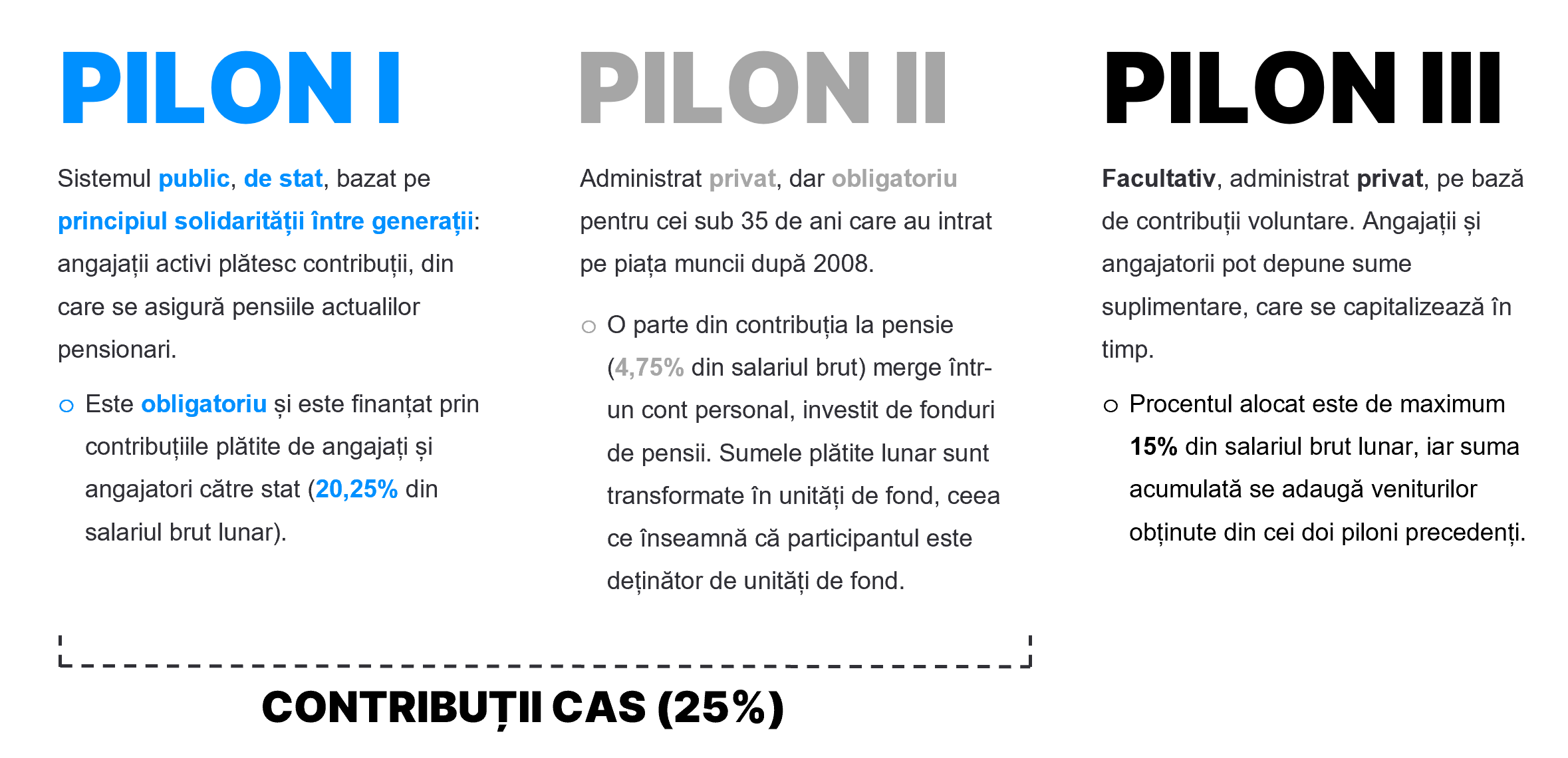
Romania currently has a system based on three pillars:
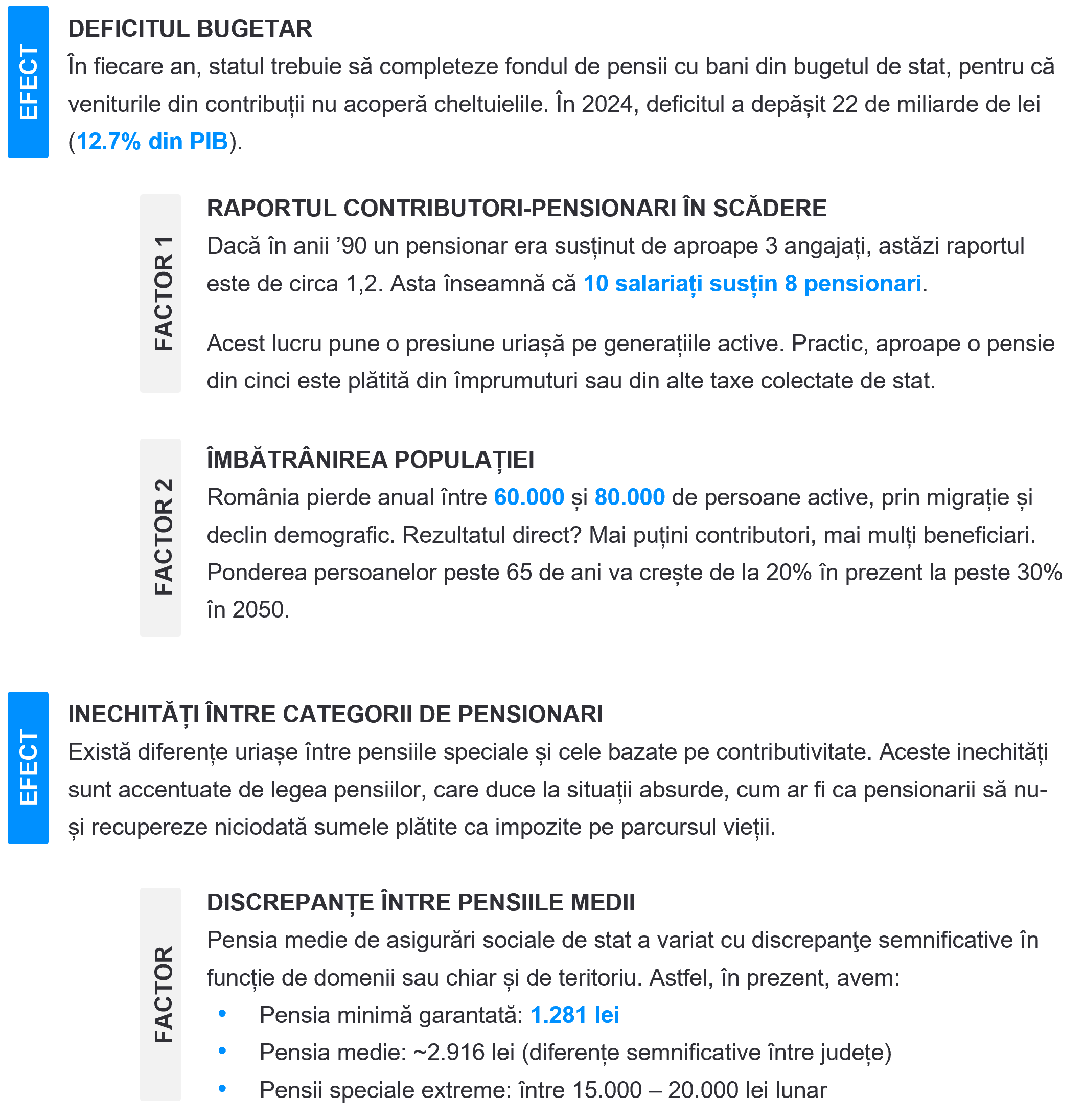
SYSTEMIC DEFICIT
In theory, the national pension system should represent the perfect balance between social solidarity and individual responsibility, so that it is fair for all over 4.56 million state pensioners that Romania has. In practice, however, there are many imbalances:
REFORM: EXPECTED RESPONSE
|
|
WHY THE BUZZ?
The Romanian pension system is fragile, with a structural deficit, unfavorable demography, and major inequalities. At the same time, it is the system that supports our parents and grandparents. It depends directly on how many Romanians work and contribute, on how long they live after retirement, and on the balance between generations.
The European Union has conditioned part of the funds from the PNRR (National Recovery and Resilience Plan) on the adoption of a pension reform aimed at ensuring long-term stability, but, in the absence of drastic changes, the state risks no longer being able to pay pensions solely from contributions, which would mean increasing pressure on the budget and on younger generations.
We must understand that once again we are all involved, and our direct involvement in this matter means informing ourselves from reliable sources, not jumping to hasty conclusions, and holding the state accountable for the measures implemented.