If something is too good to be true... About deepfake
Malicious people online are among the first to adopt new technology to refine their scamming methods. Among today's technologies is also Artificial Intelligence (AI), which, when used in this way, has led to the creation of a new scam method, known as deepfake.
What does deepfake mean?
Deepfake is the technology that allows malicious persons to take information falsification to the next level by generating videos with people who do and say certain things, even if these they have NEVER done or NEVER said.
Recent, Romanian Police, in partnership with National Directorate for Cyber Security (DNSC) and Romanian Banking Association, they have raised the alarm about frauds related to financial investments that use, among other methods, deepfake technology.
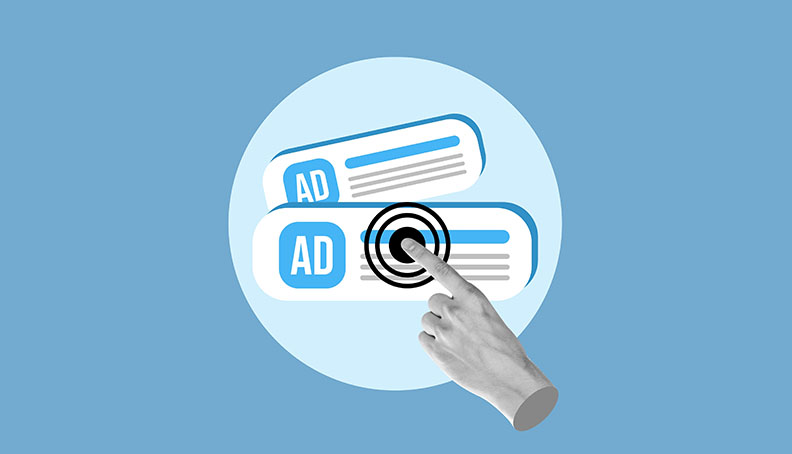
Recently, attackers have been intensively using social media networks (Facebook, Instagram, LinkedIn, Tik Tok, Threads, YouTube) as a method of spreading fraudulent attempts with false investment proposals. To be as convincing as possible, attackers use accounts or compromised social media pages, or new create, from which it launches sponsored ads, which include altered clips with deepfake technology and constructed in a way that the characters in the clip seem to promote a "national enrichment program".
How does the ”National Enrichment Program” work?
- To be as convincing as possible and to increase the success rate, attackers use the image of some known people from Romania (celebrities, businessmen, journalists etc.), who urge potential victims to act.
- It is used the image of some well-known companies to make it easier to gain the potential victims' trust regarding the legitimacy offer unrefusable (very large immediate earnings through the purchase of shares that will generate dividends of tens of thousands of lei). At the moment, most companies, whose image is used, without rights, I am from the energy field.
How do we stay safe?
- We are vigilant when we are on social media. We call on critical thinking and try to pass the information delivered to us through our own filters.
- We check the information related to the page or the account promoting such traps. We can do these things by paying attention to information such as the date a page was created or the date from which the page started its activity. A useful tool in such situations is also Advertising library made by the company Meta through which the authenticity of an advertisement can be verified.
- We review the information that reached us. In case of frauds of type Investment Frauds or Investment Frauds we access from a new tab of the search engine the site Financial Supervisory Authority – ASF for checking the authorized bidders.
- We pay attention to the correctness of the text or the video message. If certain phrases seem incorrect, this can be a clear sign that the advertisement is a deepfake. Sometimes attackers use automatic translation tools which inevitably generate errors in the language they communicate in.
- We pay attention to image quality and also to distorted videos or those that do not seem natural. Some clues in this regard are the improper synchronization of the speakers' lips with the text they are narrating, unnatural blinking, artificial or bizarre movements, missing shadows, and unnatural lighting. These signals are part of the effect ”uncanny valley” in which our brain realizes that a video is unnatural.
- We critically analyze the content. In case the message, whether text or video, is shocking or important, we also look for another source of information. Usually, in these cases, the media will report these things. If no reliable source covers this subject, there is a good chance that this content is a scam.
- We avoid accessing the links from such sponsored posts offering quick opportunities for getting rich or saving money. If something is too good to be true, it probably is exactly that.
- We are attentive to alarmist messages that invites us to take quick action.
- We take care of those around us. There are people in the online environment who have a higher degree of vulnerability than us when it comes to such scams, so it is our responsibility to contribute to a safer environment by reporting fraud posts.
- WE DO NOT provide personal or contact data under any circumstances for signing up for get-rich-quick schemes.
- We NEVER enter or send bank datahow the card number, card expiration date, CVV or CVC code are.
- In case I have entered bank details, we call the bank to which we are clients. For BT clients, the contact number is 0264 308 028.
- In case we were harmed, we file a complaint with the Romanian Police and notify the DNSC (phone 1911 or alerts@dnsc.ro).
We want to know that you are safe and we are here to help you. That is exactly why we created page #OnlineSafety which we invite you to access, whenever you need to still a few pieces of information about the safety of your data and your money. But don't forget, #OnlineSafety is a team effort, so once again we invite you to...
Wait a bit before click 😉!
Sources: